
TIRED OF YOUR THINKING DE-RAILING YOUR RESULTS?
The 3-step Thinking Error Challenge helps you identify the thought patterns holding you back, and gives you a process to change them to your advantage.
Get immediate access.
By submitting this form, you agree that we may process your information in accordance with our Privacy Notice. If you have any questions about how we handle your data, please contact us at [email protected]
How thinking errors work
If you have ever made a decision based on what you assumed someone else was thinking, concluded the worst before the facts were known, or spent a day worrying about how bad a situation could become, you are already familiar with thinking errors.
You just might not have known that is what they were.
Thinking errors are not a sign of weakness or poor judgement. We are all susceptible to them. Our brains are built for survival, but we now live in a modern world. The problem is not that you have them.
The problem is when they go unnoticed and unchallenged. Because an unchallenged thought leads to an unhelpful emotion. An unhelpful emotion leads to a reactive decision. And a reactive decision tends to produce behaviour that you don't aling with, or results you did not choose.
Most people who are working on their performance are focused on behaviours and outcomes. However, as you can see, the challenge starts earlier, as it is often the thoughts that set everything else in motion.

What you get when you sign up
- 1 easy to use pdf workbook.
- A clear 3-step process.
- Step 1: A plain-language guide to some of the most common thinking errors, what they are, and how they affect your performance.
- Step 2: A structured worksheet to record the thinking errors you notice showing up in your own day, so you can identify the patterns that affect you most.
- Step 3: A process for challenging the thoughts you have identified and replacing them with more accurate ones, leading to more considered emotions and better decisions.
Step 1 of the challenge takes around 10 minutes to work through initially. After that just a few minutes per day, just enough time to do some reflection and make a couple of notes. The approach is grounded in cognitive behavioural theory, the same framework used in clinical settings and in high-performance leadership development programmes. The workbook give you a structured way to apply it to your own thinking, and you can even work at your own pace.
Who am I?
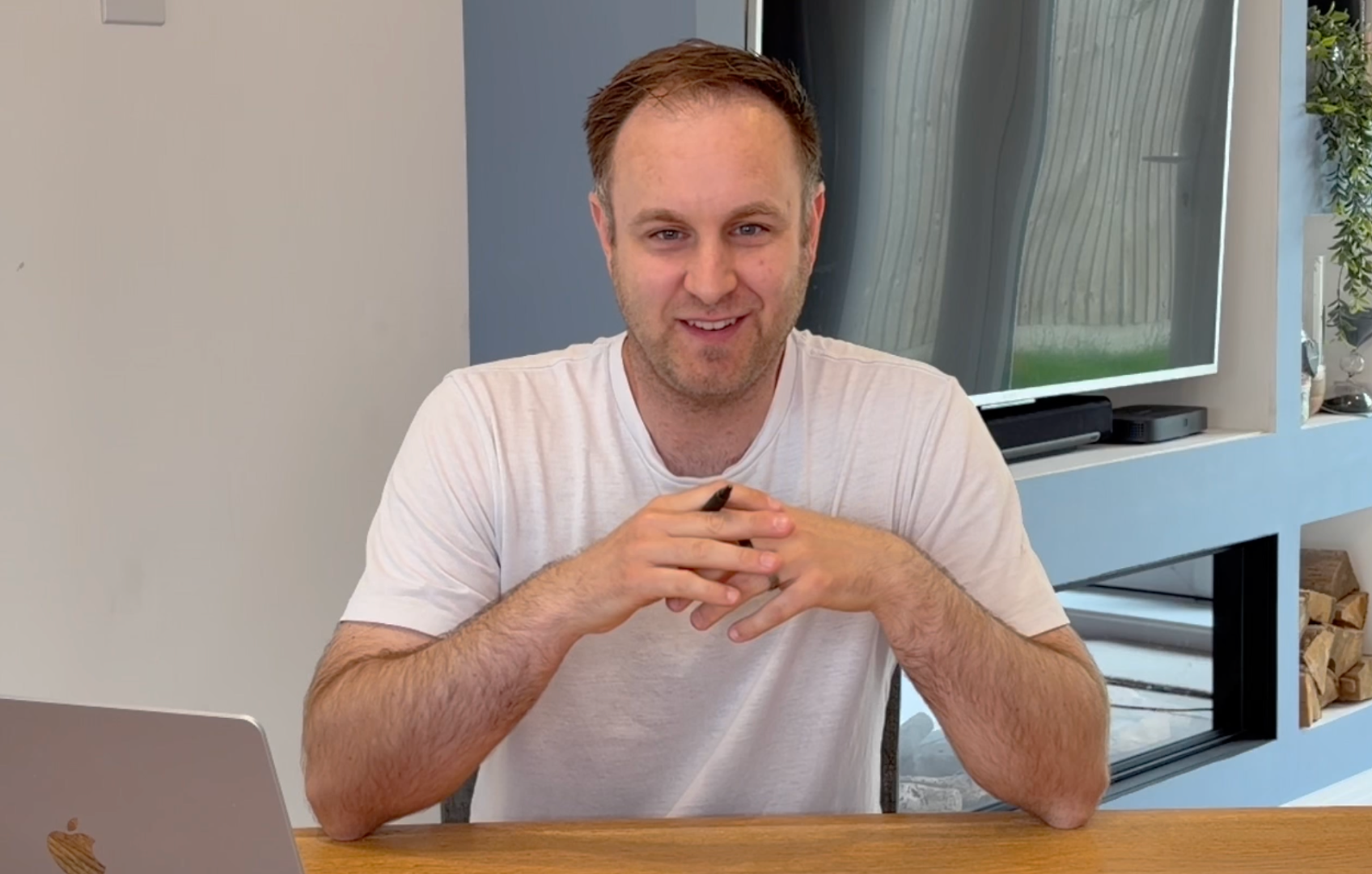
I am Sam Bruce, a Business Psychologist and business coach with a background in high performance sport. I now spend much of my time working with senior leaders who want to develop greater self-awareness, to be healthier and happier make sharper decisions, and perform consistently in high-pressure environments.
I find that thinking errors often sit at the root of a significant proportion of the performance challenges I see in my work. The leaders who learn to notice, catch, and challenge their own thinking habits report improvements in decision making, communication, relationships, and the way they respond under pressure.
This challenge is the starting point. It takes a concept that can sound theoretical and makes it practical, personal, and immediately useful.
READY TO TAKE BACK GREATER CONTROL?
Enter your name and email below and the challenge will land in your inbox immediately.
Let's go!
By submitting this form, you agree that we may process your information in accordance with our Privacy Notice. If you have any questions about how we handle your data, please contact us at [email protected]